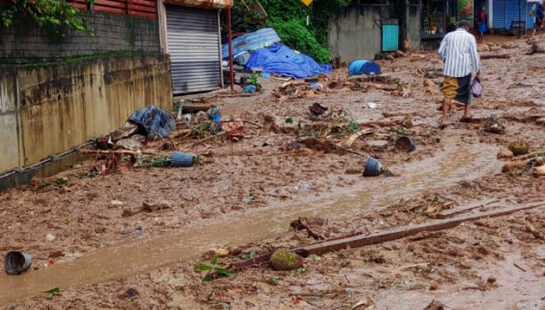
For the 122 million people currently displaced—and for those who have endured this hardship and are still rebuilding their lives—the needs are immense: for safe shelter, food and clean water, healthcare, psychological support, ways to earn a livelihood.
Our Partners serve many people who’ve been impacted by displacement—from families fleeing conflict, to communities that have been forced to relocate due to environmental change. Poverty and poor health outcomes are common challenges, and much of their work involves helping communities find solutions to these problems, so they can thrive in health and wellbeing.
Here are four of the most significant reasons people are forced to flee their home, and how you can help our Partners meet their needs.
1. Conflict
This year, nearly 90 per cent of people displaced within their own country (that’s 73.5 million people) were displaced due to conflict and violence.* Hot spots include countries such as Sudan, Lebanon, Syria, Afghanistan, Gaza Strip and Ukraine.
Families displaced in conflict zones often live in shelters for long stretches of time, leaving them vulnerable to malnutrition and disease. Many are forced to move multiple times, disrupting livelihoods and making it difficult for children to continue their education. When they finally come home, they often return to face destroyed property, limited resources, and the challenge of rebuilding under extremely challenging circumstances.
2. Hunger
Displacement and food insecurity are closely related, and one often leads to the other. When food is scarce—perhaps due to drought, conflict, or an economic crisis—families may be forced to relocate to meet their needs.
Conversely, food insecurity is especially prevalent in displaced communities. Unreliable access and not enough humanitarian assistance can make it difficult for families to meet their food needs. For those who have sought refuge in other countries, lack of citizenship often prevents employment and access to social services.
3. Sudden Onset Disasters
A sudden onset disaster is a hazardous event that occurs unexpectedly, severely affecting a population.
Each year, around 25 million people flee from sudden onset disasters such as floods, landslides, earthquakes and tsunamis. When these events occur in communities that are already fighting poverty, they can reverse progress. Mami Mizutori, UN Special Representative for Disaster Risk Reduction, says that this year, disasters have pushed 26 million people back into poverty. ‘The World Bank calculates the economic loss, the real economic loss, from these disasters is US $520 billion each year,’ she said.
One of the key programs run by our local Christian Partners is disaster risk reduction and response planning. This helps people not only prepare for disasters, but also recover faster if they’re displaced after an event.
4. Slow Onset Disasters
Unlike a flood or earthquake that creates damage almost instantly, slow-onset disasters are foreseen events that unfold over a long period of time—months or even years. Droughts, salinity intrusion into fresh waterways, or rising sea levels can displace whole communities, forcing families to relocate as their homes and way of life become unviable.
Villages situated in low-lying lands, such as the Solomon Islands, are at high risk of flooding, rising sea levels and other climate change impacts. For example, Nathanial, who volunteers with our local Christian Partner in the Solomon Islands, helped relocate his entire community as sea water swallowed his island home. With no option to stay, the community were forced to rebuild their homes, stone-by-stone, on the only land available to them—among mangroves. Nathanial was just a child at the time.
How You Can Help

Nathanial is now a local pastor who volunteers with our Partner to stop preventable disease, improve rubbish management, install toilets in each home, and train communities in better sanitation practices. These initiatives have transformed communities (in some cases eradicating diseases like malaria) and ensured families have a safe environment to call home.
A safe and secure home is what everyone wants for Christmas. Will you give to our Christmas Appeal and help our local Christian Partners support families at risk of insecurity, illness, poverty and homelessness?
 Kathryn Chieng,