
Most of us who grew up in Australia, or a similarly privileged country, have fond memories of starting school. I can still vividly remember the layout of my kindergarten classroom and that indefinable smell that went with it—was it crayons?
Some years later, I relived the experience through my three children. Now they’re university students with many opportunities ahead of them.
The Cycle Of Poverty
We’re so familiar with sending our children to school that it’s easy to forget that for many families around the world, education is out of reach.
And the patterns repeated from one generation to the next are not filled with promise and potential, but focused on avoiding the threat of poverty and hunger.
We’re so familiar with sending our children to school that it’s easy to forget that for many families around the world, education is out of reach.
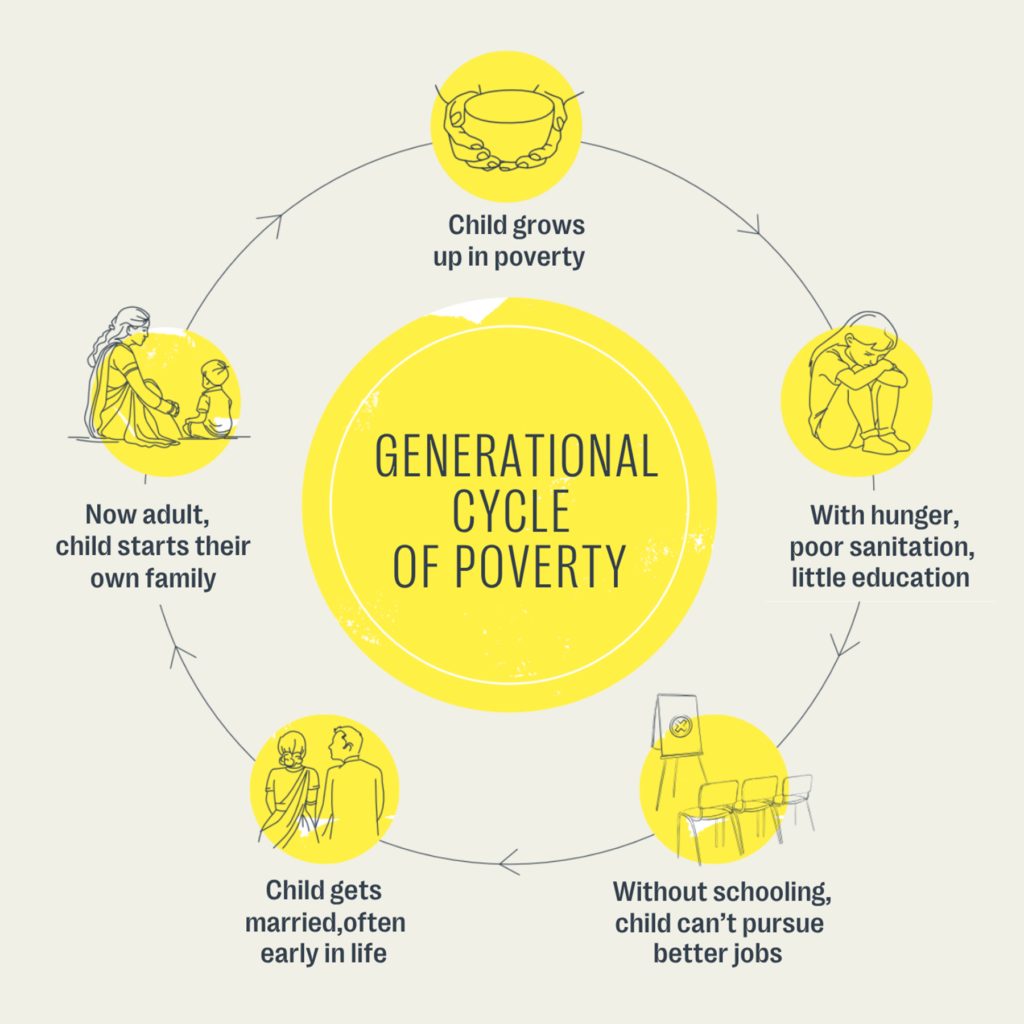
Poverty Keeps Children Out Of School
UNICEF’s 2025 report, The State of the World’s Children, paints a dark picture: ‘417 million children are severely deprived in at least two of life’s essentials—education, health, housing, nutrition, sanitation and clean water.’
That’s about one in five children around the world!
Concerningly, deep cuts to international aid over the last few years have particularly hit programs that focus on addressing education access in vulnerable communities. UNICEF now estimates that by the end of 2026, an additional six million children risk being unable to attend school.
This is a grave injustice.
But Isn’t School Free?
Like in Australia, school in Cambodia is technically free and enshrined as a right for all children, but it still comes with significant expenses.
In practice, government spending on education in Cambodia is one of the lowest globally, and schools rely on parents to provide books, uniforms, and other supplies. Sometimes parents are also expected to supplement teacher income.
This puts school out of reach for the most vulnerable families, especially in rural Cambodia where many families are already at full stretch just putting food on the table, and rely on children to help with labour.
That’s what happened to Sali.
Sali’s Story
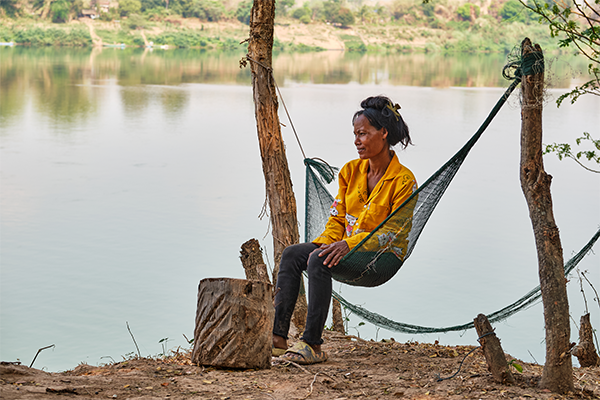
Sali grew up in an isolated part of Cambodia where poverty is widespread.
Many of our local Christian Partners serve in hard-to-reach places because we choose to work among the most vulnerable communities. When Sali was young, she was sent to school, but pulled out just five months later as the family struggled to grow enough food, and needed her help on the farm.
Later in life, Sali relied on that same land to provide for her own child, Sok.
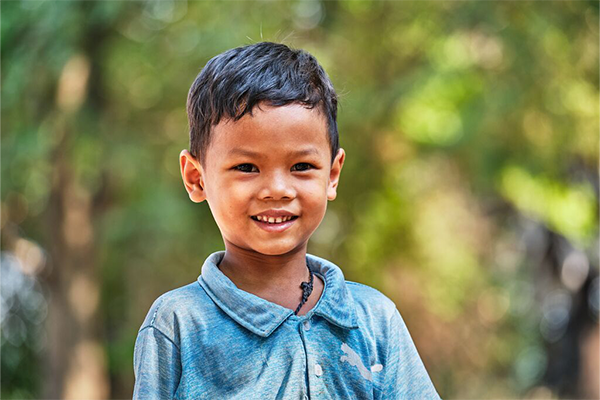
But her lack of agricultural training left her unprepared to deal with the inconsistent rainfall in her region. Sali knew Sok needed to go to school, but she couldn’t afford to pay for the supplies he needed, so he missed out.
Thankfully, our local Christian Partner working in this remote part of Cambodia was able to help. With agricultural training, new skills in breeding chickens and a solar powered pump to feed water to her farm, Sali’s economic situation improved dramatically so she could afford to send Sok to school, changing his life trajectory completely.
Breaking The Cycle Of Poverty
Rebekah Cochrane is Baptist World Aid’s International Programs Manager (Child and Youth) and collaborates with our Christian Partners around the world to see an end to poverty for as many children as possible.
‘It’s far better to equip parents with income generating skills than to pay for children’s needs directly,’ said Rebekah. ‘When our local Partners help parents like Sali generate their own income, they become self-reliant. And that results in long-term stability for the whole family, and the best possible opportunity for children like Sok to access education and avoid poverty in the future‘.
‘When our local Partners help parents like Sali generate their own income, they become self-reliant. And that results in long-term stability for the whole family, and the best possible opportunity for children…’
‘When our local Partners help parents like Sali generate their own income, they become self-reliant. And that results in long-term stability for the whole family, and the best possible opportunity for children…’
Want To Support Families Breaking The Cycle Of Poverty?
We’ve known for a long time how important education is in breaking poverty cycles—supporting families so they can access education for their children is a critical part of our work.
And you can help.
Our Matching Grant Appeal offers an excellent opportunity to make a bigger impact on poverty. Your tax-deductible gift will be combined with funding from the Australian Government through the Australian NGO Cooperation Program (ANCP) to support our work in Cambodia, Nepal, Lebanon, Bangladesh and Kenya.
Please consider a gift today and help goodness grow where poverty thwarts potential.

 Melissa Lipsett,

 Laura,
