
The civil war in Sudan is one of the world’s most severe humanitarian crises, yet it’s also one of the most overlooked.
Right now, more than 33 million people—over half the population—urgently need humanitarian aid. Three years of conflict have led to mass displacement, severe food insecurity and disease outbreaks, yet international support has declined due to funding cuts and limited media attention.
Although war is catastrophic, God sees what’s happening. He draws close to the broken-hearted, and when we do likewise, we reflect his love and care.
That’s why we’re so thankful for the work of our Christian Partner in Sudan, and for supporters like you who gave to our Hunger Crisis Appeal.
Your support has helped provide lifesaving nutrition and health care to displaced families in West Darfur—especially young children, pregnant women and breastfeeding mothers who are struggling to survive. Here’s what that support looks like on the ground.
What Are The Current Needs In Sudan?
Communities across Sudan, especially in West Darfur, are currently experiencing severe levels of food insecurity—in some cases, famine. Most farmers have lost access to their land, and displaced families rely on humanitarian assistance to survive.
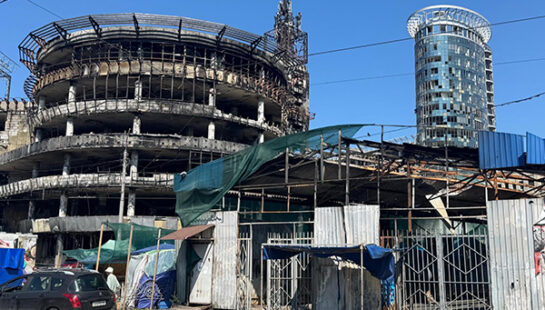
This has led to a high rate of malnutrition among children and women, and a rise in diseases such as cholera. Many essential services have collapsed, and the local health infrastructure is overburdened, leaving families without adequate healthcare and mothers without support before or after they’ve given birth.
How Have Our Partners Responded?
Through supporters like you, our Christian Partner has provided thousands of people in Sudan—mostly children under five, pregnant and breastfeeding mothers—with free nutrition and healthcare services.
This group faces the highest risk of severe health complications and death, making early intervention critical.
Our Partners provided:
- Nutrition support—young children were screened for malnutrition, with treatment and nutritious food provided to help those who were malnourished gain strength.
- Medical care—people were treated for conditions such as diarrhoea, malaria and respiratory infections, and infants were immunised against diseases to keep them safe.
- Antenatal care—pregnant mothers were screened for hypertension and anaemia, and provided with iron-folic supplements, tetanus vaccinations, and clean delivery kits to ensure a safe birth.
- Postnatal care—nurses visited families to provide check-ups, health services and breastfeeding support, so both mothers and their babies can thrive in the early months.
- Training for healthcare workers—our Partner provided nurses, community healthcare workers and other frontline staff with training, so they are equipped to meet people’s needs.
What’s Happening In Sudan Right Now?
After three years of violent civil war, millions of people in Sudan are experiencing high levels of hunger. Famine has been declared in certain areas such as El Fasher in North Darfur, and Kadugli in South Kordofan, and at least 20 other areas are experiencing severe food insecurity. The UN estimates that 4.2 million children are acutely malnourished.
The UN estimates that 4.2 million children are acutely malnourished.
At the same time, Sudan’s health system has collapsed in some areas, and severely limited in others.
More than a third of health facilities across the country are no longer functional, which leaves millions of people without essential medical care. Diseases such as malaria, diarrhoeal diseases, and acute respiratory infections have become common amongst families living in displacement camps, and young children are especially vulnerable.
What Can I Do?
Despite so much hardship, God has not forgotten those who are vulnerable in Sudan. Please continue praying for infants and young mothers, asking that God would provide for their needs and protect them from harm. Pray also for our Partners, for protection, strength, and resilience in difficult circumstances.
If you’d like to give again to help more families in Sudan access nutritious food and healthcare, you can do so here.

 Melissa Lipsett,

 Laura,
