
‘Let the little children come to me, and do not hinder them, for the kingdom of heaven belongs to such as these.’ (Matthew 19:14)
Children are incredibly important to Jesus.
Like so many other Christians, I became a Sponsor because I had a desire to follow Jesus in caring for children living in poverty. It was relatively easy to pick up a card with a cute child’s photo on the front and start giving monthly to see them thrive.
I still think following Jesus is a great reason to become a Sponsor. But after working with Baptist World Aid for several years, I’ve come to see that Sponsorship is also an incredibly effective way to transform communities now and for generations to come. By supporting a child, Sponsors are packing a powerful punch at poverty and injustice—and surely that delights Jesus!
Can Children Really Create Change?
Years ago, when Child Sponsorship was just starting, the emphasis was mostly on meeting the immediate needs of children and ensuring they could access school. This is still fundamental to our programs. But importantly, children now also learn the 42 Conventions on the Rights of the Child so they can advocate for themselves and others against things like child marriage, violence, human trafficking, exploitation and neglect. In this way, children are emboldened as partners in humanitarian aid and community development rather than beneficiaries of charity. This builds self-sufficiency and confidence in the emerging generation of leaders.
Are Unsponsored Siblings Supported?
Many people ask whether siblings are left out when one is part of a Sponsorship program and others aren’t. It’s a reasonable question—imagine how unfair that would seem!
Thankfully, that’s not the way our Child Sponsorship works. When a person in Australia takes up a Sponsorship through Baptist World Aid, they’re committing their $52/month to supporting a child within a family and community. That means all the children in that community can go to Child Club, mums and dads learn new and better farming methods, vocational training workshops are made available to everyone, and community-wide infrastructure—like access to fresh clean water—benefit the whole community.
Our data analysis shows that each Sponsor helps at least 35 people in the community. Best of all, our local Christian Partners are committed to being community-led, and that means the programs are exactly what’s needed to transform communities into places where all children thrive now and in the future.
Sponsorship Breaks Poverty Cycles
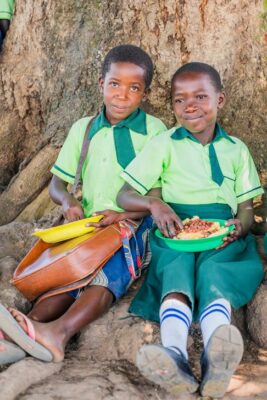
Last year, I met eight-year-old Olivia who is part of our Child Sponsorship program in rural Kenya. In this community, parents worked long days in the fields growing vegies, just to get dinner on the table. Without modern farming methods, all effort had to be spent on gathering enough food for the family, with nothing left for investing in the future. When Olivia was born, there was no school in her village, and children largely spent their days working alongside their parents. It had been this way for generations—poverty following poverty without an end in sight.
But Child Sponsorship helps break the cycle of poverty. As well as supporting parents through agricultural training, Sponsorship helps strengthen local organisations, like the church, so they can extend their work. In Olivia’s community, the local church was supported to build and run a school. Now Olivia and all the children in her community have access to education, and their trajectory has shifted away from poverty! Olivia hopes to become a teacher one day.
I love being a Child Sponsor, praying for and writing letters. But I’m even more thankful to God for the opportunity Sponsorship has given me to help lift a community. Sponsorship really is much more than helping a child; it’s a way for Christians here in Australia to challenge the injustice of poverty in Jesus’ name.

 Melissa Lipsett,

 Laura,
