
Seventy-two-year-old Sesilia was at home when Hunga-Tonga-Hunga-Ha’apai volcano erupted in January 2022, causing a tsunami to sweep along the west coast of Tonga.
As deadly waves drew closer to her village and families fled to higher ground, she became increasingly afraid. Sesila can’t walk, and she relies on her husband and daughter to provide round-the-clock care. Getting herself to safety would be an extremely difficult task.
‘I can’t walk around and I need someone to help me,’ she said. ‘I was afraid when the tsunami came. My husband took me to another house in another village. He carried me.’
Resilience Alone Isn’t Enough
Despite their resilience—and how strong their families are as carers—practical barriers, such as lack of mobility, make it difficult to evacuate to safety. People with disabilities are also often marginalised in communities that don’t have accessible infrastructure, making it difficult to take part in disaster preparedness activities, or access essential services such as healthcare.
When disaster strikes a community, people living with disabilities are often amongst those who are most vulnerable and at risk of harm.
Since the eruption of Hunga Tonga-Hunga-Ha’apai volcano, thanks to generous supporters like you, our Christian Partner has been helping families meet their needs, recover from trauma and regain their livelihoods.
Now they’re helping people with disabilities be better prepared for disasters when they occur.
What Is Disaster Preparedness?
Communities grappling with poverty often lack the resources they need to prepare themselves for a disaster. And for people with disabilities, the risks are even higher.
According to our Christian Partner, who has longstanding relationships with families impacted by the tsunami, people with disabilities are struggling with things like inaccessible pathways, not being able to access transport, unsafe sanitary facilities, and social stigma.
‘We have found out, in one of our surveys, in previous disasters that this group of people are neglected,’ said Partner staff member, Siu. ‘[They] are more likely to be staying in their homes most of the time, they also need someone else to help them.’
Disaster preparedness is about working with people to strengthen their capacity to anticipate, prepare for, and recover from disasters.
In Tonga, our Partner’s disaster preparedness project focused on helping four communities identify and solve the problems that people with disabilities were facing.
After talking to families about their needs, they worked with church leaders and organisations in Tonga’s disability sector to provide support.
Now 43 people—including elderly community members and young children—have received assistive devices such as wheelchairs and ramps, along with food, hygiene kits and other essentials.
No One Left Behind
One person who received support was 17-year-old Angelica, who struggles to leave her home and was often ostracised because of her disability. Our Partner provided her with a wheelchair and installed a ramp in her home.
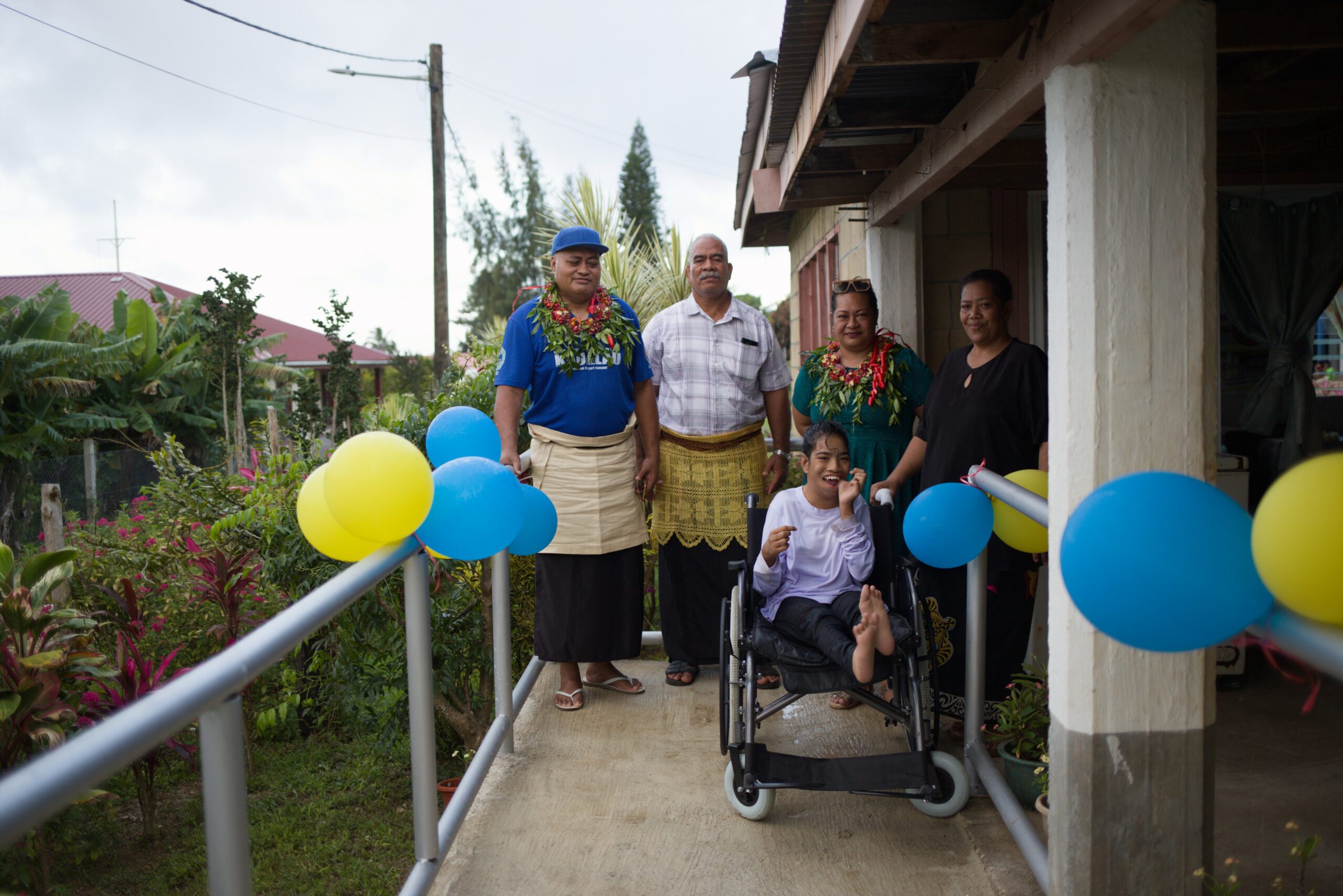
Now she’s not only able to evacuate in an emergency, but also be part of everyday life in her community.
‘There’s a saying that goes, “no one is left behind,”’ Siu said. ‘[Since this project began], there is a big difference in the mindset of people, and how they react with the people with disabilities. They accept them and starting to support them in whatever ways they can, within their churches and within their own communities.’
Immediately after the tsunami hit, Sesila was able to access a small amount of assistance from the Tongan government, but this dried up as the months turned into years, leaving her unsupported on the long road to recovery.
But thanks to our Partner’s project and supporters like you, Sesilia now owns a wheelchair, and her home has ramps for easy access.
‘I am happy when they come and see me,’ she said when asked about our Partner. ‘Thank you very much for coming to help me.’
Thank you for generously supporting people like Sesilia and Angelica as, together, we remove the barriers that stop them from staying safe in a disaster.
Here’s some ways you can continue praying for people in Tonga as they improve their resilience. Pray for:
- Dignity and equality for people with disabilities, that they would be valued in their community
- Preparation and safety when disaster occurs, so they have the best chance of survival
- Strength for families and carers, who provide support often under immense pressure
- For our Christian Partners as they continue working alongside communities to remove barriers and improve quality of life
Would you like to help more people in vulnerable communities prepare for disasters? Give to our Disaster Action Fund, and you’ll be supporting those who need it most, so they have the best chance of survival when disasters happen.
 Melissa Lipsett,
 Laura,
