
Let’s start with a quick knowledge check:
- How many people died in the two earthquakes that struck Myanmar on 28 March this year?
- How long has civil unrest been a concern in Sudan?
- What is one of the causes of Madagascar’s severe humanitarian crisis?
If you’re unsure, you’re not alone—and you’re not to blame.
We live in an age of instant connection. News, images, and personal stories from across the globe reach us in real-time, making distant tragedies—like floods in Pakistan or conflict in Gaza—feel heartbreakingly close. This constant exposure fosters empathy, but it also brings a quieter challenge: fatigue.
I sometimes hear people say they avoid the news for their mental health. And despite working in the humanitarian sector, I often feel the same. The headlines are overwhelming, and the solutions feel out of reach. We can feel guilty and we often feel powerless to change what we see. It’s not apathy—it’s emotional exhaustion.
But there’s more to our collective disconnect than just fatigue.
I contributed to a paper last year published by the Integral Alliance that explored several reasons why humanitarian crises around the world—from chronic droughts to prolonged conflicts—remain invisible to so many of us. Let’s unpack these reasons here.
What’s Driving the Disconnect?
Geopolitical and Economic Priorities
Aid often goes to countries with historical or economic ties to donor nations, not necessarily those in greatest need. Colonial legacies, foreign policy interests, and economic incentives shape where support flows. We tend to care more about places we’re historically or geographically connected to. Think about the countries you do hear most about in the news. Chances are they’re most likely regional neighbours or economically important.
Lack of Media Coverage
Media outlets are driven by commercial pressures—advertisers pay per click. Long-term crises in places like Yemen, South Sudan, and Myanmar are underreported due to limited access or information fatigue. This lack of visibility affects fundraising, political will, and public engagement.
Donor Fatigue and Protracted Crises
Constant exposure to global suffering can lead to desensitisation, critically reducing funding for recovery or response efforts. People often prefer to support projects with quantifiable and visible outcomes. Sustaining interest in complex, long-term emergencies is much harder, but the hidden cost is the countless vulnerable lives left behind in crises the world no longer sees.
Impact of Climate Change
Vulnerable communities, especially in more fragile states, are disproportionately affected by climate change, which worsens poverty, displacement, and food insecurity. The contributing factors of climate change are often slow onset and not newsworthy but compound exponentially over time. For example, Sudan was still recovering from the drought-related famine and displacement of the 1980s when a recent civil war worsened conditions.
Insufficient Support for Locally Led Action
Too many aid projects are driven by external agendas with little regard for sustainability. Local actors are essential for lasting change, but they face funding gaps, staff shortages, and limited capacity-building. Empowering local initiatives—rather than controlling them—is key to long-term impact.
So What Can You Do?
Yes, global crises can feel overwhelming. And yes, the systems in place can make it hard to stay engaged and in the loop. But here are a few practical ways to stay informed and involved without burning out:
Take Small, Consistent Steps
You don’t need to do everything. Choose one issue to learn about, support, or advocate for. Even small actions contribute to broader change.
Make It a Group Effort
Compassion is hard to sustain alone. Find or build a community of people who care about global issues. Shared learning and action can help you stay motivated and encouraged.
Diversify Your News Sources
Seek out news outlets local to the crisis or outside the usual Western media bubble. Aid organisations often publish in-depth articles that go beyond headlines and often feature first hand stories.
Take it to God
Remember God is at work in all situations and that His heart is for those on the margins, those who the world forgets. You can access some great prayer resource on this topic through the Integral Alliance here.
Put Your Money Where Your Mouth Is
Your support helps keep neglected crises on the agenda. It ensures that communities receive not just emergency aid, but the long-term resources they need to rebuild and thrive. Donations for campaigns like the Hunger Crisis Appeal can supply critically needed essentials like clean water and medical services to families battling famine in Sudan.
Activate Your Voice
Understand that it’s not just your dollar that talks, but also your vote and your voice. Reach out to your local MP and advocate for increased foreign aid budgets for our global neighbours in need. Initiatives like the Safer World For All campaign are a great place to start.
What Would You Add To This List?
Take a moment to consider how you stay engaged with global issues without becoming overwhelmed? What helps you care about people you’ve never met, even when the world feels like it’s working against you?
To learn more about the factors contributing to neglected crises around the world, you can read the report here.


 Baptist World Aid

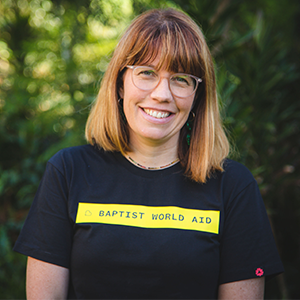 Meredith Benson,
