
It’s often said that to keep dinner party conversation pleasant, one should avoid three topics: religion, politics and money. Oh dear—perhaps I should stop having people over for dinner because in my role as the Chief Executive of a faith-based international aid and community development organisation, I can’t help but talk about all three!
In saying that, I’m familiar with those uncomfortable moments when conversations turn political, and it would be much easier to smile and nod or start talking about the weather. I certainly don’t suggest we participate in belligerent arguments but as followers of Jesus, perhaps we should be prepared to show a little boldness—not necessarily regarding party politics—but certainly in respect of the political environment as it effects human flourishing.
Jesus Didn’t Shy Away From Politics
Jesus was frequently confronted by people trying to back him into a political corner. In Matthew 22:15-22, some of Herod’s supporters came up with this curly question: should Jews pay the taxes levied by the Roman government? To say ‘yes’ would upset the Jewish people who were resisting the injustice they faced as people ruled over by Rome. But to say ‘no’ could put Jesus in trouble—big trouble—with the powerful Roman rulers. Tricky.
But Jesus isn’t put off by this obvious attempt to wedge him politically. He responds by pointing out that coins are made in Ceasar’s image and says, ‘So give back to Caesar what is Caesar’s, and to God what is God’s.’
His answer was a sharp rebuke for the Herodians—influential Jews who were political supporters of Herod. Jesus wasn’t scared to engage and redirect the conversation to what really mattered—obedience to God as well as respect for the relevant authorities.
Love Me? Then Love Them
Murky questions of money and politics quickly clarify if we focus on that obedience and what is most valuable to God. In the above interaction, Jesus’ words bring to mind Genesis 1:26, and remind us that humans are unique within creation, made in the very image of God with all the dignity and value this signifies. And although every person is made equally in his image, there’s no question that throughout Scripture God consistently demonstrates particular concern for the vulnerable. You can take a deeper look at some passages here.
So, in any given situation, it’s beholden on followers of Jesus to consider the impact of politics, power and financial gain on vulnerable people.
Are we—especially those who are among the wealthiest people in the world—loving others the way Jesus would have us do?
Jesus takes this doctrine of caring for the vulnerable a step further, telling his followers that when he returns as judge, people will be sorted into two categories: those who love him, and those who don’t. To those who love him, he will say:
‘For I was hungry and you gave me something to eat, I was thirsty and you gave me something to drink, I was a stranger and you invited me in, I needed clothes and you clothed me, I was sick and you looked after me, I was in prison and you came to visit me.’ (Matthew 25:35-36)
Then he clarifies that attending to the needs of the most vulnerable—’the least’ in the world’s eyes—is one way in which we love him. Might I even suggest that this is when we love him best?
‘Truly I tell you, whatever you did for one of the least of these brothers and sisters of mine, you did for me.’ (Matthew 37-40)
I’m not suggesting that solving poverty is simple. It’s caused by a complex set of problems requiring collaboration between world leaders, experts in the field of community development, generous donors and agencies, local authorities, advocates and, not least, the communities themselves. A group effort that is inherently political.
But the Bible does offer us a simple, straightforward framework for knowing what God would have us do, and what he would have us implore our leaders of every political persuasion to do—to love him and to love others.
He has shown you, O mortal, what is good. And what does the Lord require of you? To act justly and to love mercy and to walk humbly with your God. (Micah 6:8)
What Does This Mean for Us?
As followers of Jesus, we’re not afforded the luxury of being silent in difficult contexts. We are, of course, called to listen to others—showing respect and kindness, the way Jesus listened and engaged with others—consider Matthew 18:1-6 as just one example of Jesus’ gentle patience with his disciples. But acting justly, and loving mercy also requires boldness, action and conviction.
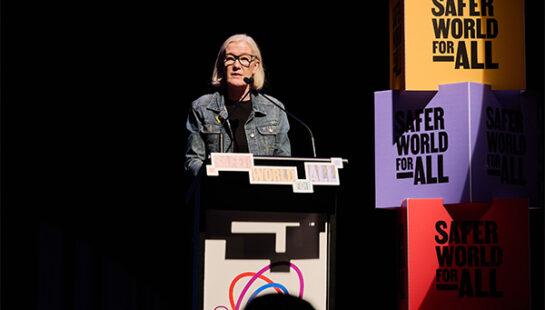
While we may sometimes want to shy away from uncomfortable conversations and situations, we must take every opportunity to speak up and show up for vulnerable people as Jesus did. This can be evident in many ways beyond political discussions—the way we treat marginalised members of our own community, thoughtfulness in how we chose to vote and engage in political and other community processes, our generous stewardship of our own resources and our posture towards all people. We can also advocate for the most vulnerable through campaigns such a Safer World For All, to correspond with our local MPs about the needs of our global neighbours. Finally, and critically, we can pray fervently for a more just world.
Our Father in Heaven, holy is your name, your kingdom come, your will be done on earth as it is in heaven. (Matthew 6:9)
Undoubtedly, it can be comfortable to step forward and speak up on political matters that impact the world’s most vulnerable, but it is in keeping with our calling as courageous people of God. So, will you open your mouth?
‘Open your mouth for the mute, for the rights of all who are destitute. Open your mouth, judge righteously, defend the rights of the poor and needy.’ (Proverbs 31:8-9)
 Mike Bartlett

 Meredith Benson,
