Ethical Fashion Guide
Which brands are working towards protecting workers and the environment? Find out so you can demand better.See the scoresFind Your Favourite Brands
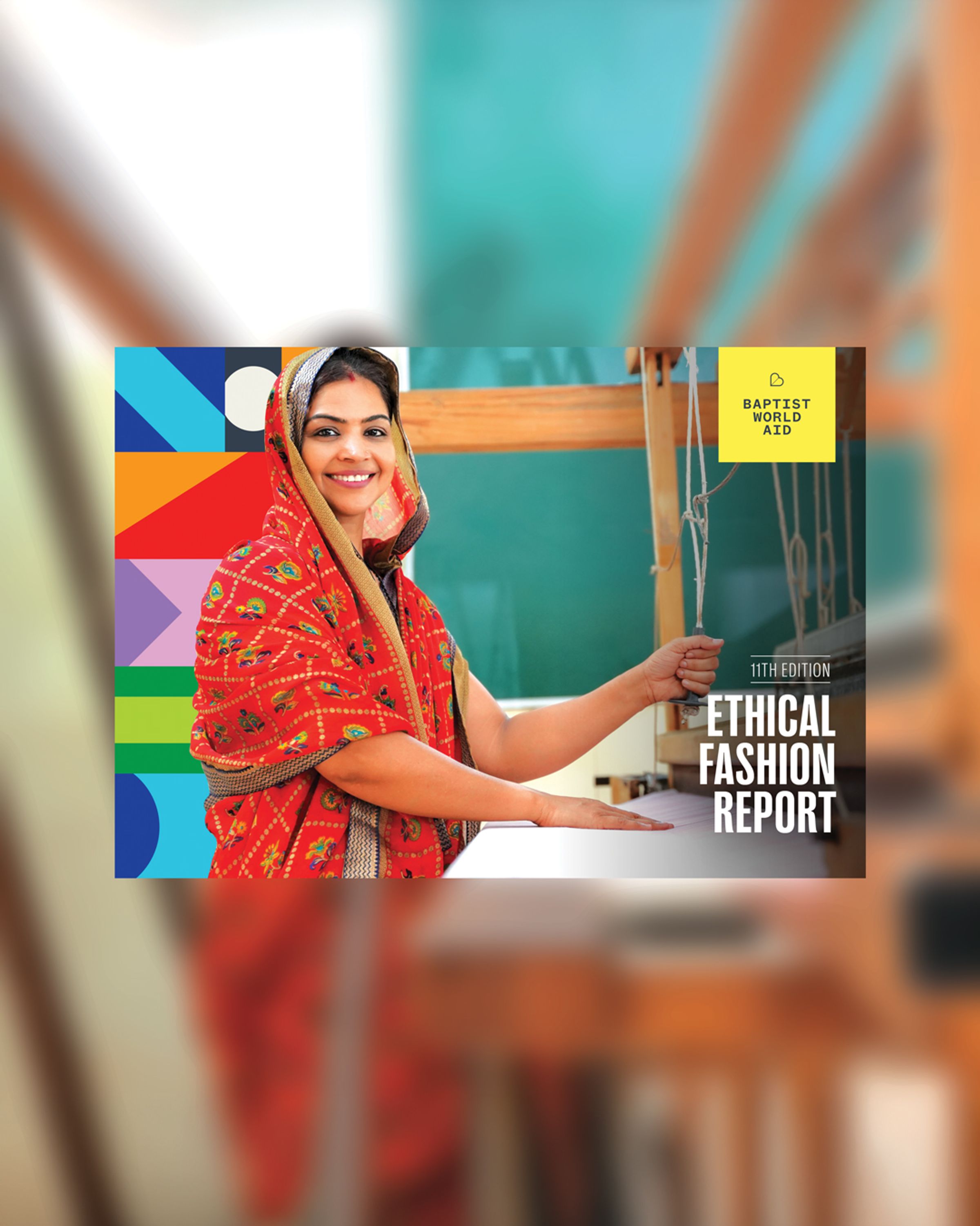
Read the 11th Edition Ethical Fashion Report
Grounded in independent research, our industry-leading report reveals where companies need to do better for people and the planet.
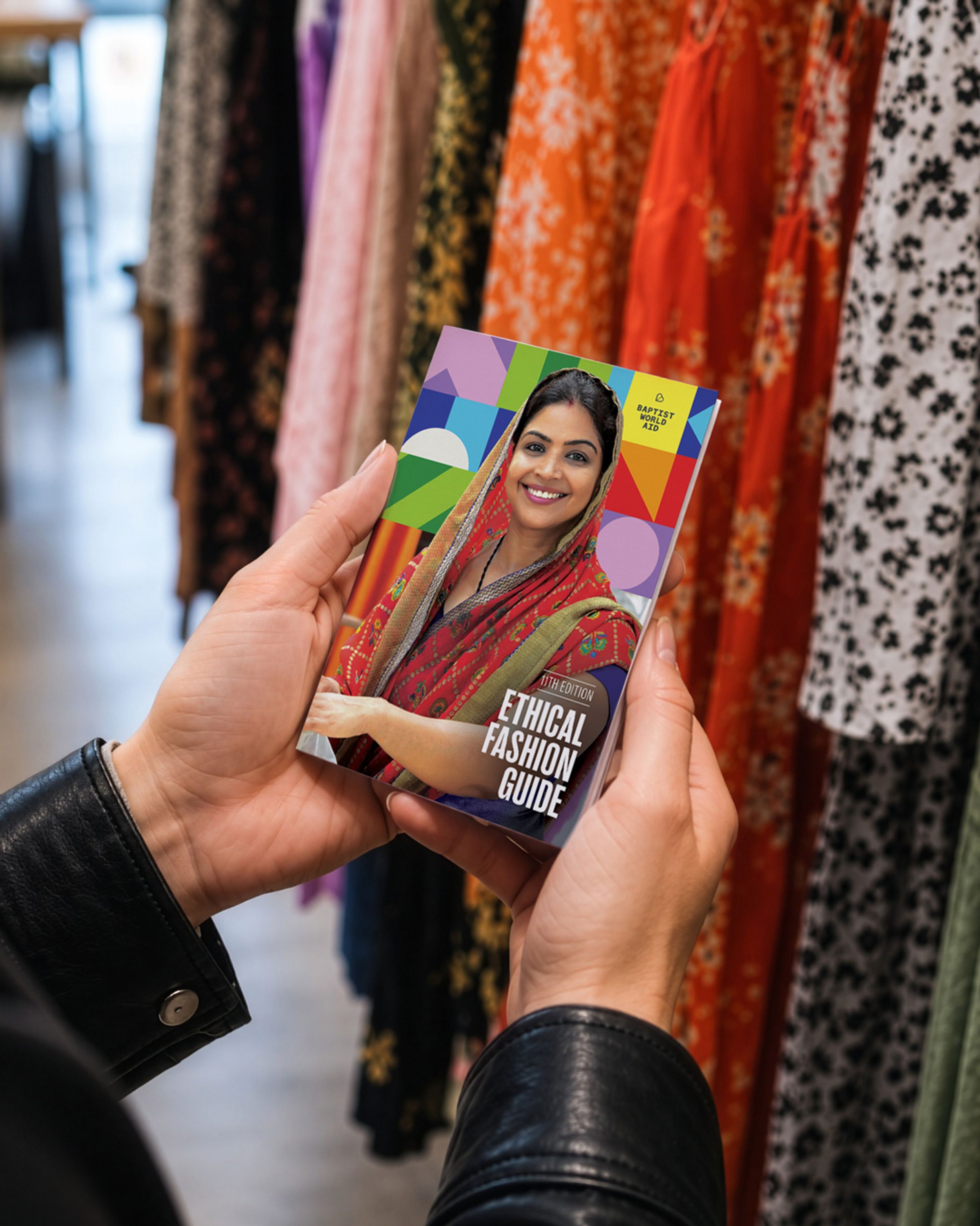
Order your copy of the Ethical Fashion Guide
Want a copy of the Guide to keep? Order a free digital or physical version today.
Let us know which brands you’d like included
Whether a brand is in our guide or not, we’ve made a simple decision-making flowchart (opens in a new tab) to help you do your own ethical fashion research. If you’d like to see a new brand included in our research, fill out the webform to let us know.
Got questions about the Ethical Fashion Guide or Report?
If your question isn’t answered here, feel free to get in touch with our friendly Supporter Engagement team on 1300 789 991 or hello@baptistworldaid.org.au
Companies scores are based on 48 questions covering 18 indicators of ethical supply chain practice. Our research uses a combination of information published on company or brand websites, company reports (e.g. Annual Reports, Corporate Social Responsibility Reports), and any relevant statutory statements (e.g. Modern Slavery Statements) that cover the research period. All companies had the opportunity to provide evidence directly to the research team. Where companies have been assessed on public information only, they have an asterisk (*) next to their score.
The research team do not conduct site inspections of factories as part of their assessment, but we have specific evidence requirements that companies must meet in order to receive credit for survey questions. Therefore, company scores reflect the strength of their labour rights and environmental management systems, based on the evidence they provide either publicly or directly to the research team. For more information on our evidence requirements, refer to the section, ‘How can you guarantee the honesty and accuracy of evidence and information provided by companies?’
We recognise that some companies may have taken positive actions that aren’t reflected in our assessment, as these actions were not evidenced. While any positive actions that contribute to the economic dignity and wellbeing of workers are to be celebrated; transparency and visibility of these actions is critical as they are the only way to ensure accountability for delivery.
In 2026, our research team assessed 107 data points per company survey, which equates to over 15,000 data points assessed for the full report. You can find more information on our research methodology in the Ethical Fashion Report and Appendix.
Fast fashion companies have driven harmful cultural shifts toward increased production and consumption. While our Ethical Fashion survey touches on these issues, they aren’t the primary focus. The survey includes various aspects of ethical practices, providing a comprehensive analysis of a range of issues.
The fact that fast fashion companies perform in the top 20 percent of companies assessed is a reflection that companies of any business model can work towards strong ethical supply chain systems.
Some fast fashion companies are doing better than most at mitigating worker exploitation in their supply chains. Their size and scale give them resources to invest in systems to prevent modern slavery—things like tracing their suppliers, effective monitoring, building relationships of influence with suppliers, and working with unions and governments. It also gives them resources to invest in innovative technologies and processes that can reduce environmental harm in specific indicators such as water pollution and emissions reduction.
To learn more about fast fashion and ethical production, read our article.
In 2026, 138 companies representing over 500 brands were included in the research. In the 11th Ethical Fashion Report, Baptist World Aid endeavoured to include all fashion companies with annual revenues exceeding AUD $50 million, and relevance to the everyday Australian consumer. Smaller companies that have been part of our research in the past are given the option to participate if they fall below that threshold. This selection process helps us include the largest companies with the greatest consumer reach, which have the most significant impact on workers and the environment.
If there is a brand that meets these criteria, that you would like to see included, please let us know using this form.
Our ethical fashion work is funded by generous supporters and partners of Baptist World Aid Australia. In 2026, Vocare Law was the major sponsor of the Ethical Fashion project. No financial support for this project is provided by any companies assessed in the research. If you would like to donate, you can do so here.
While companies are ultimately responsible for the ethical production of our clothes, you can help shift industry practices that impact workers and the environment by buying less, buying better, and expecting more. Find out more here.
You can also fund the research behind the Ethical Fashion Guide and help expose exploitation in fashion supply chains. Visit here to find out more.
Thank You!
Thank you to our Major Sponsor Vocare Law (opens in a new tab) and Supporting Partners BMS World Mission and Tearfund New Zealand.